Sunday, January 04, 2009

Amsterdam: Narrowest House?

Narrowest House in Amsterdam?


 Many places boast skinny houses built in the equivalent of alleys between other buildings. Which is the narrowest in Amsterdam? We recall that this is, but another site shown another: see ://goeurope.about.com/od/amsterdampictures/ss/amsterdam_7.htm; and this next one shows a clock facade:  ://www.amsterdamtourist.nl/en/home/about+amsterdam/Amsterdam+Surprise/article/xp/content_artikel.Surprise+EN+-Narrowest+house+in+the+world/default.aspx /

We give up. Several cities boast this kind of residence, built in the alleyways, as the narrowest in the world. See Scotland's bid at ://news.bbc.co.uk/2/hi/uk_news/scotland/1634975.stm; and Brazil's at ://freshome.com/2007/11/06/narrowest-house-in-the-world-just-1-meter-wide/

Wednesday, December 19, 2007

Non-Romanticizing Any Country - Amsterdam, The Death of Theo Van Gogh

Travel is more than seeing what is in the guidebooks off and on. It is also watching the current political, social, religious climate. The murder of Theo Van Gogh, see the book "Murder in Amsterdam, The Death of Theo Van Gogh and the Limits of Tolerance," by Ian Buruma, reviewed by Christopher Caldwell in the New York Times, 9/20/2006 at page 8. Philosophy, tolerance, the place of newcomers, and what if the newcomers are physically aggressive about their cause, the the old-timers use language and political processes.

Familiar, and a concern. Van Gogh had made a film that offended a particular Islamist because of the film's depiction of treatment of women, among other issues. There is now about a million Dutch-born Muslims in the Netherlands - of a total population of about 16 million. There is an active counterculture, and no resolution in sight.

The issue seems to be, deadly earnestness, about oppositions. Hwaet.

Friday, November 02, 2007

Anne Frank's Window View - Barking up the same tree

New York Times, October 2, 2007. There is an old chestnut tree, outside the window, outside Anne Frank's room in the Annex where she hid with her family during World War II in Amsterdam। It is ailing and about to get emergency resuctibarktation measures. It has fungi and rot, like the rest of us, at 150 years old.

Fine, but there are other diarists of World War II, not just Anne Frank. Once in a while I say, move on and now learn from some of the others, like Petr Ginz, in Prague. His diary came to light late, but he was involved and witnessing the everyday deprivations and deportations, before being sent to Theresienstadt and Auschwitz. Anne died at Bergen-Belsen-Auschwitz, but until her capture, was quiet and introspective. See Places of Petr Ginz. Meet a different child, one with day-to-day Nazi contact.

Tuesday, October 16, 2007

Your Meme on Drugs: The Netherlands, Pusher Control, User Help

A meme a "contagious idea." See www.memecentral.com/; and see more books on it.
A meme is an idea that can replicate and evolve; a bit of cultural information that spreads and can be changed and adapted in the new setting; an idea or behavior pattern that is "caught" and spread by imitation. See, for example, //thedailymeme.com/what-is-a-meme/. The term originated in 1976, says the site, and more detail is there, and identification of books.

Meme of the day: A punitive focus against users is ineffective. Companion memes: A medical-educational approach is effective. A punitive approach is effective as to dealers.

The word is spreading, from California to New England. See Hartford Courant today, 10/16/07 at Op-Ed page A9. This is a reprint of a Los Angeles Times piece by Traveliste Rick Steves, "Europe Wages Selective War On Drug Use." Read it at www.courant.com/news/opinion/op_ed/hc-steves1016.artoct16,0,5960624.

The Netherlands. Further meme. Cultural approaches to drug use, drug culture, and use effect management, can be structured for the common good, rather than for the satisfaction of punishment pushers.

Adapt the idea for yourself: Start with an analysis of which countries are already using that approach, with what results, and ask if the US can clamber out of the hole of putting users in jail for it. You may find that The Netherlands and much of Europe see drug use as an illness, not a crime. They send in the cops against dealers. They send in the medical and educators for users and anti-drug ed. It works. Find (if your research corresponds to that of Rick Steves) no significant increase in marijuana use by young people, only a slight increase in the overall population.

It is more fruitful to focus on the hard stuff, not pot. Europe has made a choice, and put their money and minds there. Rick Steves' closing sentences - "European leaders understand that a society has a choice: Tolerate alternative lifestyles or build more prisons. They've made their choice."

Go there. I believe Rick Steves is right.

Saturday, August 18, 2007

Amsterdam - Diary of Anne Frank; compare to Prague child-diarist, Petr Ginz

Anne Frank is a familiar diarist, a child writing in hiding during the German occupation in World War II, and finally being sent to her death in Auschwitz. See, one out of many resources, www.ushmm.org/museum/exhibit/online/af/htmlsite/. She is introspective, with silence around her every day. Here is where she lived: Netherlands Road Ways, Anne Frank and Etty Hillesum, diarists.

Another child also kept a diary, Petr Ginz in Prague. See Places of Petr Ginz; and Petr Ginz: Lens and Legacy. He was far more objective than Anne in describing his daily life, but then again, he was still in the middle of his life's activities. Anne was already isolated. He lived with his family openly in their home, conducting a daily family and school life as far as the Occupation and devastation would or would not permit. His entries lay out the mechanics of progressive intrusions, deportations, and deprivation. He also was killed at Auschwitz, at age 16.

We know few of the places that Anne Frank loved in Amsterdam. She was locked in. By contrast, Petr's diary is alive with city happenings, and references to events.

Here, for example, is the portal of the Spanish Synagogue in Prague, the "Dusni" Synagogue (it was located on Dusni Street) where Petr watched property being removed by the Nazis. Diary at Page 49. Did they read, shalt not steal.

Anne saw none of the daily violences of Occupation.

Read his full diary in the 2007 book, "The Diary of Petr Ginz 1941-1942", edited by his sister, Chava Pressburger who also includes an introduction and some entries from her own diary. This was translated from the Czech by Elena Lappin, Atlantic Monthly Press 2007. The many sides of experience, and how people cope.

News dateline Netherlands - Holocaust documents

The Netherlands, Amsterdam, news release 2007. The International Tracing Service, based in Bad Arolsen, see http://www.its-arolsen.org/english/index.html,has released news information of a Nazi archive in Bad Arolsen, Germany, that holds information about victims and their histories, and the process of the exterminations. These documents are being given to certain institutions for examination, but families and survivors want the release to be general and unrestricted. See
www.ibmandtheholocaust.com/articles/WashingtonJewishWeek/HolocaustSurvivorsSteaming.htm

Visit the website for how to make inquiries. An layperso's overview of this organization is at en.wikipedia.org/wiki/International_Tracing_Service.

Monday, August 13, 2007

History sites

Do not miss the Metropolitan Museum's site on timelines. Go to www.metmuseum.org/TOAH/ht/08/euwl/ht08euwl.htm, for the Low Countries 1400-1600, and play around the menus for whatever else you want to know.

Monday, July 30, 2007

Planning for, say, two days

A good resource for any trip is the New York Times travel section, for articles under the "36 hours" theme.

On July 22, 2007, the "36 Hours Amsterdam" by Gisela Williams at page 11, laid out an excellent overview. Complete with map. This is especially good because it includes sites for real activities, not just walking and viewing. Try it. Get a bike, eat, find a bar, dance, go up the watchtower, discover pancakes, dress up, go to the factory and party and beach it.

Sunday, March 18, 2007

Amsterdam - Residents - Anne Frank, Etty Hillesum; Holocaust Memorials

The Diary of Anne Frank. Here, is Anne Frank's hidden place, behind walls and up attics from her father's business, where day to day work continued while everyone kept silent above during the day, fearing flushes. These posts began as travel-logs. Now, current events and comment move in.

An old tree, outside her window, at the top, is apparently going to be preserved, after an initial decision to cut it down because of disease.

Anne Frank was the young girl who kept a diary of the time she and her family and others hid from the Nazis in WWII. Her home is also a museum now -- perhaps too much spruced up, looks too modern from the outside (last visit was in 1961), and is more manicured and staged -- still, not to be missed. See an account of her letters at www.literarytraveler.com/articles/anne_frank_her_life.aspx.

The door to the warehouse-office is the one with the little sign to the right. See the Anne Frank Museum website at www.annefrank.org/content.asp?pid=2&lid=2.

Look up more information about the Franks. There is a biography of Anne Frank also - by Melissa Muller, 1998 or so. The review in the New York Times, Tuesday, 11/29/90, says that the Franks nearly made it safely. Their train, to Auschwitz, was the last to leave the Netherlands. Anne and her sister died just a few weeks before the camp where they ended up, Bergen-Belsen was liberated.

Her father's efforts to save the family. Recently, letters showing her father's efforts to get the family out of Holland and by any route to safety, including into the United States, have been in the news. See post-gazette.com/pg/07026/756900-44.

We turned the family away because of huge immigration waiting lists, policies restricting who could enter, anti-Semitism and other issues. See today's (2/15/07) Hartford Courant http courant.com/news/nationworld/hc-frank0215.artfeb15,0,1490308.story.

Here is a fair use quote from Richard Breitman, cited there. He is an American professor interested in intelligence issues, both German and American from the time. "The decision to try hard came too late. The Nazis made it hard to leave, and U.S. made it hard to seek refuge there, both by accident and by conscious policy."

Other young besieged diarists:

Rutka Laskier
, Bedzin, Poland. See "Rutka's Notebook: A Voice From The Holocaust," 2008, see Poland Road Ways, Children of the Holocaust Diaries, Rutka Laskier.

At pages 86-89 of Rutka's Notebook are listed more -
  • Dawid Sierakowiak, from Lodz, Poland;
  • Mary Berg, from the Warsaw Ghetto;
  • Miriam Chasczewacka, Radomsko, Poland;
  • Julius Feldman, Krakow;
  • Moshe Flinker, emigrated from Poland to the Netherlands, ultimately deported to Auschwitz;
  • Tamara Lazerson, Kovno, Lithuania;
  • Ruthka Lieblich, Andr;ychow, Silesia;
  • Halina Nelkin, Krakow;
  • Masha Rolnik, Vilna Ghetto (Vilnius), Lithuania;
  • Isaac Rudashevski, Vilna Ghetto (Vilnius);
  • David Rubinowicz, Krajno, Poland.

Zlata Filipovic - Bosnia Road Ways- the then-11 year old girl, Zlata Filipovic, in Sarajevo in 1991. There is a review of Zlata's work, comparing that to Anne Frank, at jvibe.com/popculture/zlata. Other young people have posted videos and posts from bombed areas in Lebanon since then, as well as from other countries. See searchforvideo.com/countries/lebanon/ and other countries. Or go to YouTube.

Etty Hillesum - Back in Amsterdam, Etty Hillesum is another Jewish person who wrote her diary, one less known that that of Anne Frank, and in a different age group altogether. She was a young woman in her late 20's, living and working in Amsterdam, and writing before and even while at Auschwitz, where she died. Very different life issues, but do read "Etty Hillesum: A Diary 1941-43."

Petr Ginz, Prague, the Czech Republic, see Czech Republic Road Ways, Prague at War (see excerpt from Diary of Petr Ginz about the assassination by the Polish Resistance of Nazi leader, Reynhard Heidrich). See also Places of Petr Ginz.

Here are some of her words: www.creativequotations.com/one/291.htm.

The Holocaust is also well remembered at an open-air theater, the Hollandse Schouwberg where Jews were collected and catalogued and then could go home before being "called up" to report. See www2.holland.com/us/discover/amsterdam/highlights/jewishheritage/quarter.jsp. There are names, pictures, accounts.

For the history of the Jews in the Netherlands, see www.jewishvirtuallibrary.org/jsource/vjw/netherlands.

Thursday, February 15, 2007

Art in Amsterdam - Rembrandt; VanGogh; Vermeer; the Rijksmuseum

Rembrandt. 1606-1669. Find his history and place in art at ibiblio.org/wm/paint/auth/rembrandt/. At that site, you can click on specific works - go to The Night Watch - one of his most famous. It is also misnamed - the dark color is the varnish, aging. Not intended to be night. Just a group portrait. Then click on the sections for his individual portraits - note the light and dark, the light source, the fading and contrasts. The emphasis on light is why I like his statue here at Rembrandt Square - out in the open. His house is now a fine museum. See The Rembrandthuis at www.rembrandthuis.nl/cms_pages/index_main.


See Rembrandt Square, the old Butter Market, at
aviewoncities.com/amsterdam/rembrandtsquare.

The Rijksmuseum. A day in itself. You can download the Rijkswidget and see a different painting from the collection every day. Go to rijksmuseum.nl/widget?lang=en. I found a particular painting, Old Woman at Prayer, by Nicholaes Maes 1656 - a reproduction had been familiar since childhood -- the original found using the website's easy referencing. It is even reproduced in the museum store. To find what you want: start at masterpieces, selecta theme (for this old woman, at her meal, I typed in "woman;" and scrolled across every single object-painting with woman as a main theme. Ingenious locator. Go to rijksmuseum.nl/index.

Going up the walkway, we saw a joint in the lion's mouth and lots of tourists taking pictures. So did we. Amazing how legal things can blend in, regulate behavior as it affects others, but not in privacy; and people just make choices. Make something illegal and all the negatives of deputizing and enforcers fly about like, pointing fingers, regardless of what they do in their own lives, like so many airborne monkeys. A new Oz.

Then see the VanGogh Museum across the way. Modern. This site takes you to many cities and sites - go to arounder.com. For the Van Gogh in Amsterdam, go to amsterdam.arounder.com/arounder_specials_van_gogh_museum/java. For VanGogh himself and his art, go back to the Web Museum site, Paris - ibiblio.org/wm/paint/auth/gogh/. A favorite in Amsterdam - The Potato Eaters, unforgettable look at regular people eating regular food. Click on the thumbnail of the painting at the site, and the large size appears. For VanGogh fake paintings issues, see vggallery.com/misc/fakes/fakes2.

Johannes Vermeer. A huge mural here. Here is the Rijksmuseum gallery of Vermeer works: rijksmuseum.nl/aria/aria_artists/00017083?lang=en. Girl with Pearl Earring. Vermeer's Painting. See about-vermeer-art.com/vermeer/vermeer-oil-paintings/paintings/1.

Wednesday, December 06, 2006

Nijmegen - Operation Market Garden - Bridge; VE Day


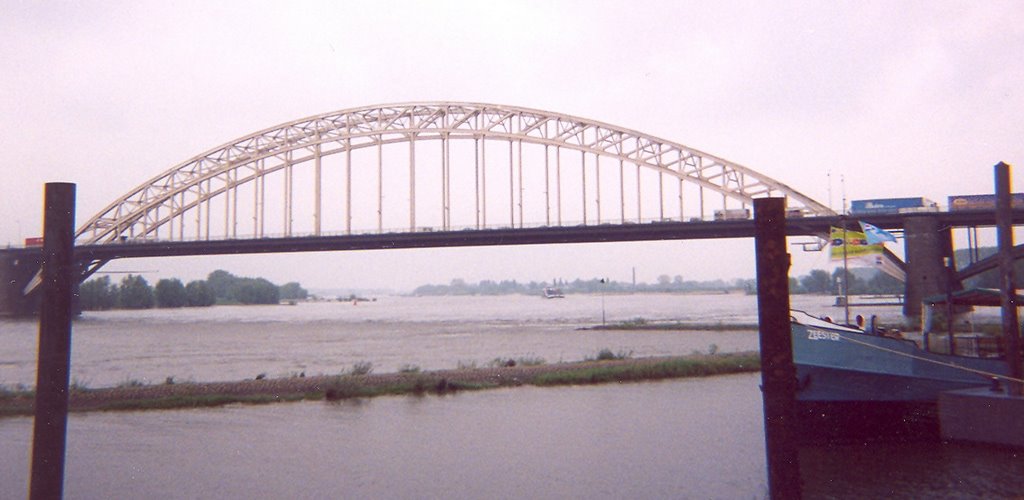
We wanted to follow the WWII battle areas of Operation Market Garden, commemorated in the film story, "A Bridge Too Far" (that was the bridge at Arnhem, the focus of the British assault as part of the overall operation, to the north). Here is the bridge at Nijmegen, where the Americans fought. The city is the oldest town in the Netherlands, see //english.nijmegen.nl/historical, dating from Roman times, and Charlemagne.

Operation Market Garden had tragic results, see www.thehistorychannel.co.za/site/features/operation_market_garden.php, but much heroism.

We found a hidden little hotel at the river Waal, and by the Bridge itself - The Hotel Courage. Small, excellent location - and not far from the casino, if that is your interest. The hotel is the houselike building in the foreground below.


Find the chronology of the battle at www.wingsofliberation.nl/mg-chrono-uk. The Netherlands retains its gratitude for the effort, despite heavy civilian losses. This has become a lasting bond - maybe that does require an overall war cause that is agreed at the time as necessary. Enduring memorials for valor. If there were not an agreed cause, would that have lasted.

See the barge going under the bridge in the picture - many barges on the riverways are also the family's home, and the family car may well be at the prow or stern, for use when docked. There is a great deal of that on the Rhine, in Germany. Also the family dog is often visible. And the car on the prow.

Several men were camped out under the bridge - not homeless-looking - more like veterans. Some slept all night there. We were aiming for the Canadian war cemetery at Grosbeek nearby.

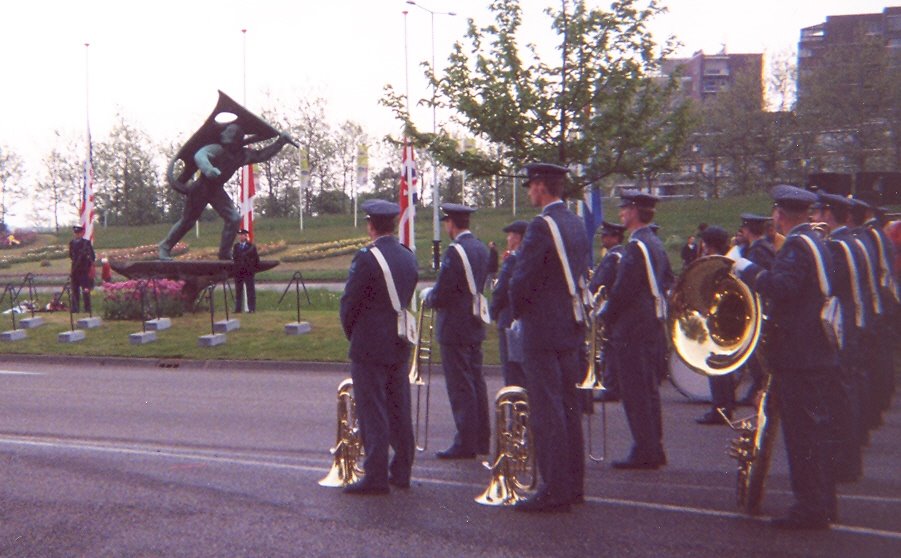
I believe it was the US 82nd Airborne that focused at Nijmegen. There are annual marches by veterans. See picture and account of Operation Market Garden at www.strikehold504th.com/holland.php.

There were large numbers of Canadian forces at Nijmegen, and the Netherlands still sends hundreds of bulbs to Ottawa. On VE Day, Canadian veterans and representatives are there for memorial services at nearby Grosbeek.

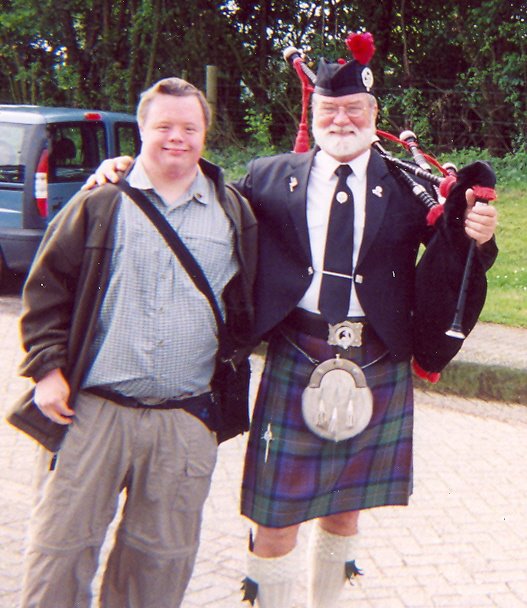
A national reputation still honored. The piper, we thought, was fitting for another relative, a Royal Scots Fusilier, who died in WWI and is buried near Ypres, Belgium, at Arras, France.


Nijmegen is in Gelderland, central and west in the Netherlands. See a Nijmegen guide at www.nijmegen.nl/ontdeknijmegen/english/index.asp.

For more complete website, see www.world66.com/europe/netherlands/nijmegen.

This parade suddenly went by the window of little place where we were eating, at dusk.

The marchers were also in wheelchairs, and it looked like most of the town was participating. It looked like all surviving relatives were invited to join.

Nijmegen is also the site of an old Charlemagne castle ruin, see Charlemagne's biography and search for Nijmegen at www.chronique.com/Library/MedHistory/charlemagne. It is on the headland overlooking the river, part later rebuilt in 1030. The connections between places come as a surprise. The royal villa is referred to at www.heroicage.org/issues/6/forsman. This is in connection with Charlemagne and dispute resolutions. Romans also were here. See www.livius.org/no-nz/nijmegen/noviomagus-civil. There is a handy map there.

Tuesday, December 05, 2006

Kinderdijk - Windmills


Windmills. Whoomp. Whoomp. Most are the new tall skinny blingy kind that are white and three-armed and in great groups on windfarms. But the old are still there, and many in use.

These are huge. Whoomp. Watch your head.

You can go right in, and climb all around and see where the family stayed and how they arranged their household and sleeping and living areas inside. Read about "Living In A Windmill" at www.kinderdijk.org/tour.

The arms are accelerated or slowed by yanking on an anchor to stop it, and then adjust the canvas sails that are attached and rolled. Whoomp. Whoomp. Then there is a big screw that takes the water and pushes it up to the next level. You soon get used to the thumpiness.


Windmills are the workers that make the polders, see how to drain farmland at www.nai.nl/polders/e/hoe_e., that supports the farmland that produces the food that feeds all the people. Go to that site for a film on how to reclaim underwater areas for farmland.


Here is the farmland. The polder itself. Flat flat. Look closely, leftish side, over the top of the car.

The canal running through the polder here is so high and almost at the field's level - those are masts of the sailboats going right by - as though they were floating through the fields. That is the roof of our car. The boats look higher than we are.

Sunday, December 03, 2006

The Hague - Madurodam Miniature Village


The Hague - arts, politics, courts, diplomacy. See www.denhaag.com/default.asp?id=DOORWAYNEWS-uk.

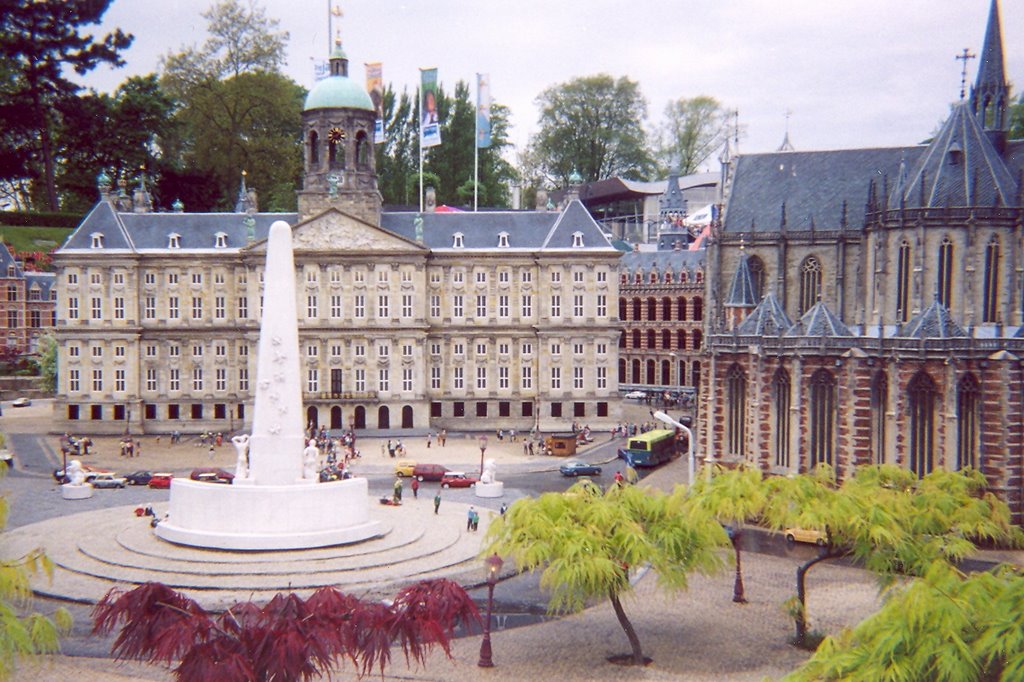
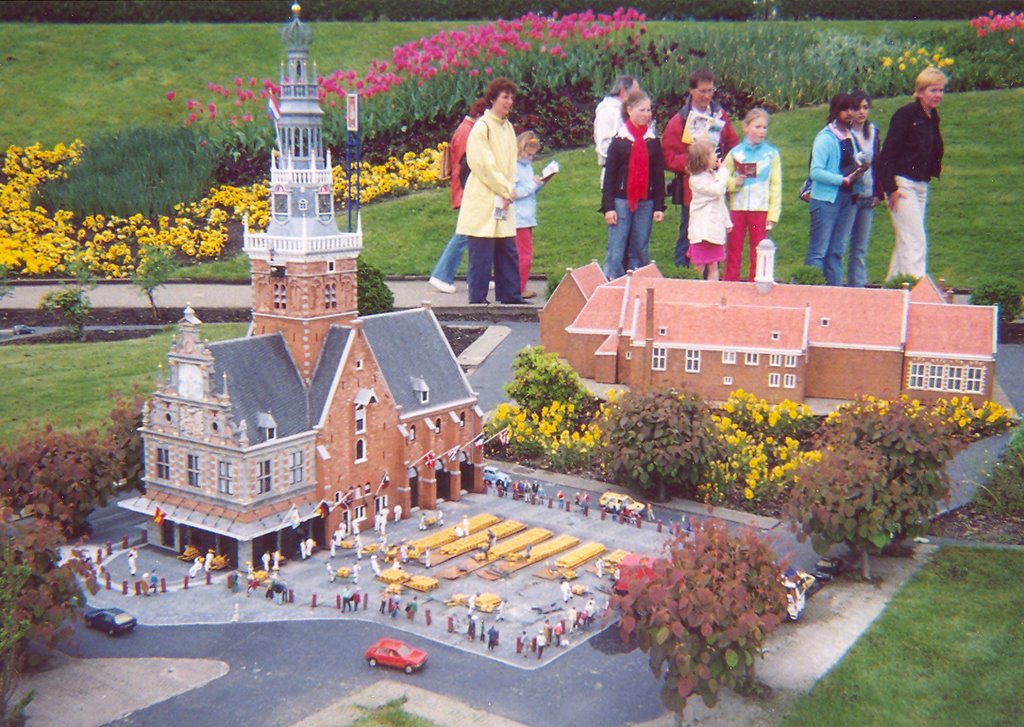
We were interested in recreation, so went first to Madurodam, that wonder-filled miniature Netherlands world that opened in 1952, a tiny Holland. Full photo tour here: www-pnp.physics.ox.ac.uk/~miyagawa/photo/travel/madurodam/

Our first picture - a sample scene that looks ordinary. Second picture - same town, but with giants.

Little boats glide around, trains and buses go, all of historically significant Holland (looks like) represented in some way here. It is outside The Hague. The towns are recognizable - Schiphol Airport, flat polder land reclaimed from the sea. All to scale.

This site says JML Maduro built it in memory of his son who died in the concentration camp at Dachau in 1945. It is a large website, so look for The Hague and then Madurodam. See www.rozylowicz.com/retirement/holland2005/holland4. Profits to children's charities. Opened in 1952 by Queen Juliana. Amazing humans. Out of Dachau, a dream at Madurodam.

Friday, December 01, 2006

Tulips - Lisse, Keukenhof Gardens


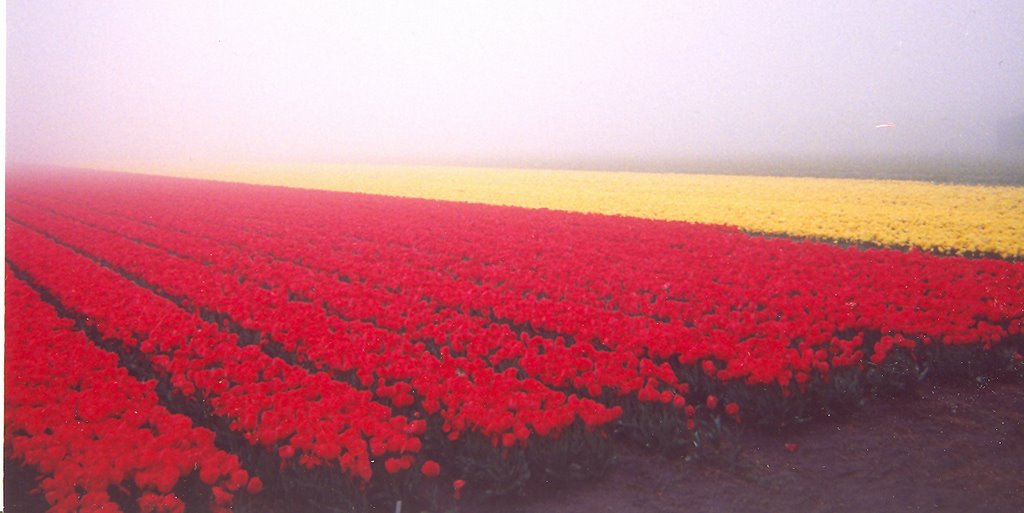
Time your visit to tulip time, in May. Even in the rain, the colors are spectacular. The choice with rain like this is to head in another direction, and hope for better weather when you return. Or, see it as it is, as we did. We went despite the rain because local lore said that petals will fall after a great rain. Catch it when you can. Keukenhof here is a public garden - there since 1949 and now some 6 million bulbs, says the book. Some tulips well past knee-high, even nearly to hip once in a while, and I'm not short. See europeforvisitors.com/europe/articles/keukenhof_gardens.

There are well-spaced rest areas in the gardens, with food -- needed, because this is a really big place.

Thursday, November 02, 2006

Arnhem - Operation Market Garden - A Bridge Too Far

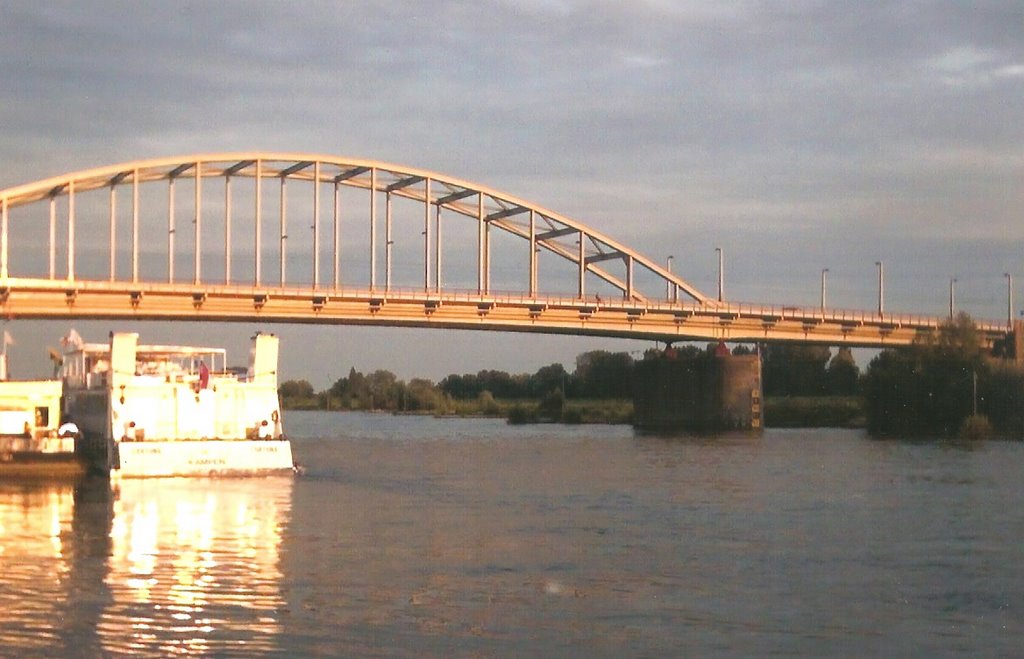
A fine time to see this bridge, the primary Bridge Too Far, at Arnhem, is at sunset. There is a good restaurant here on the river, giving a contemplative view of the bridge.

The bridge is named The John Frost Bridge in honor of the commanding officer who held the bridge for such a long time in September 1944, waiting for the reinforcements that never came. See a memorial history at www.rememberseptember44.com/.

There is a memorial with pictures, outdoor, nearby. Also see the Airborne Museum in nearby residential Oosterbeek, in the hotel that was a center of the fighting in that area. Another history: www.worldwar2database.com/html/arnhem.

Links, posts, archives

All references to third-party websites are in word form, not the handier blue-links. Copyright concerns us. See www.bitlaw.com and other sources.

The posts here began in the trip's reverse chronological order - arrival at the earliest posts, and ending with departure. Do read the archives - they begin the journey.

Technorati Profile

Add to Technorati Favorites

Wednesday, November 01, 2006

Reading list - in addition to Anne Frank

Try the diary of a 27-year old young woman, for an adult perspective and series of thoughts
"Etty - A Diary 1941-43" by Etty Hillesum, born 1914, and died in Auschwitz 1943. Triad/Panther paperbacks 1985 (my copy).

She lived in Amsterdam.

Monday, October 23, 2006

Itinerary After the fact - Netherlands, Belgium, Luxembourg

We did these three countries in one trip:

NETHERLANDS -
1. Amsterdam,
2.West to stretch and see the sea: Zandvoort
3.South to tiptoe: Lisse - and the tulips
4. South meander: The Hague - Leiden - Delft -
5. World War II - Rotterdam
6. West to particular nest of windmills - Kinderdyke
7. West to Bridge Too Far area, World War II - Nymegen (this bridge they got; it was Arnhem that was too far) and Grosbeek (also Canadian army memorial)
8. South toward Mastricht, too much traffic (Bush there) so lovely time at alternate small scenic Valkeburg
9. World War II - Bastogne

LUXEMBOURG -
9. Ettenbruck -
10. The General Patton memorial at Diekirche
11. Castles at Vianden, - Larochette
12. Luxembourg City -- the tunnels

BELGIUM -
13. Napoleon at Waterloo
14. Brussels - do feast on the street vendor snails
15. Ghent - Kortrijk -
16. World War I at Ypres - my uncle (Canadian) fought there; a distant cousin with the Scots is buried in nearby Arras, France; look it all up at the documentation office at Ypres and go find them. Nobody forgotten until forgotten.
17. Antwerp -stay on the 1950's retired and moored cruise liner near the old city docks

NETHERLANDS -
18. West to Middelburg - see the model of the bomb that decimated this rural town WWII
19. Domburg and rural peninsula areas, over the dikes
20 Gouda - park and walk, even if hefty walk. Canal parking is risky.
21. Alkmaar -- must see the cheeses. Stay in center Alkmar-
22. North and west and drive across the huge dike holding back the North Sea, the Afsluitdijk -
23. Medieval Urk, once an island, now in the middle of reclaimed polder
24. South again to get more of Bridge Too Far area - Het Loo - Arnhem (there the big bridge is, the one that was too far) - Amersfoort -
25. North to Haarlem -
26. Amsterdam - Hoofddorp was best place to sleep before flight out next day from Amsterdam's airport

Thursday, October 19, 2006

Middelburg's Bomb and Domburg's Commandos - WWII


Middelburg- little city, big history. It is in a southwest corner of The Netherlands known as Zeeland, quiet and, until recently, very traditional. It dates from the 8th or 9th centuries, and had been a major port for the Dutch East India Company. The town is far off the regular routes. In 1940, the city was bombed by the Luftwaffe to force surrender of Dutch forces. The city is rebuilt, but archives lost. In the square is a model of a big bomb, on its end, as a reminder and memorial. This site shows "A Boy's Memories:"www.combinedops.com/Walcheren%20WW2_Memories.

Etty Hillesum, the young woman in her 20's who wrote a diary in Amsterdam during the War, and died in Auschwitz, was born in Middelburg. See the Virtual Museum at Middelburg at archimon.bravepages.com/zeeland/middelburg.

The picture is at the nearby town of Domburg: Same peninsula, on the water. It is a seaside resort and here is someone's fine big beach house. Imagine the people inside sometime in 1945, probably suitably dressed for the evening dinner, with no idea that - just outside, at the beach, allied commandos are landing and creeping-dash-leaping from the shadows to some meeting place (blades in teeth?) and by now just outside the door. The memorial plaque says just that: allied commandos landed here.

A midget submarine, a WWII German Seehund, was found abandoned at Domberg. See www.one35th.com/seehund/sh_operation.

I remember beach watches. Highlands, New Jersey. The Twin Lights.

Wednesday, October 18, 2006

Alkmaar - Cheese Market and Best Apartment


Fridays are cheese market days - so we timed our visit to be in Alkmaar for it. The town is north of Haarlem, on the way to the big dyke, the Alfluitsdyk, across the North Sea, and do go that way. If no time, loop back to Amsterdam and Schiphol Airport.

Alkmaar's Cheese Market - see more at europeforvisitors.com/europe/articles/alkmaar_cheese_market.


Each of those big wheels of gouda, we were told by a porter, weighs about 13 kilograms, and at 2.2 pounds or so to a kilo, each wheel is about 30 pounds?


The porters are big. They carry the orders to the "public weigh house" on sleds, the colors matching the buyer.


For a place to spend the night, we didn't want a regular hotel - all too far from the old town and its pedestrian mall - so went to the tourist bureau and found an address right in the old town. Most of the old town is walking only,so you have to park somewhere else and hoof. That's usual. And good for you, and why we pack so little.

Our spot turned out to look discouraging - a large pub to one side where the overnight rental business was conducted, and since this is Holland, there is indeed overt overnight business being conducted all over. There was an outside staircase to a second floor to rooms, and we just took it. Why not? Indeed. It was there, and so were we.

Bonanza. Inside was a full apartment, fresh and fine furnishings, all the comforts, and best of all, a huge jaccuzzi and also a huge shower with a million heads jetting out absolutely all over. Loved it.

The next morning, one of the porters came in for coffee while we were at the pub next door for our breakfast, and told us all about what was to happen at the market. The lady in the picture above did a splendid breakfast and we think Alkmaar is terrific. We have no bathrooms like that here at our house. Must go back. Remember the number up by the door there and go. See what you can do when you are not on a bus?

The city dates from the 10th century. See the history of Alkmaar at www.alkmaar.nl/portal2/pages/english/history.

Monday, October 16, 2006

The Afsluitdijk across the sea; and Urk - Island fishing village, now on reclaimed mainland


Dykes are everywhere; the largest is the Afsluitdijk in the northern area, finished in the 1930's. It holds back the North Sea. See the size of it in Afluitsdyk photos at outdoors.webshots.com/album/552587230IKkFdP. There is a major highway across the dyke. It has sluices that flush in and out to maintain the salt in the Ijsselmeer, for ecological reasons; and to adjust for storms. Would Mississippi benefit from the technology? It is a matter of will, not way.

The effect of the dyke and overall reclamation has been to turn islands into towns on the mainland.

Urk had been a remote fishing village, isolated on its own island, in the Ijsselmeer, east coastal area. With the large Afsluitdijk now across from North Holland to Friesland, land is being reclaimed - and Urk with its lighthouse is now mainland. The lighthouse at Urk is listed at www.lighthousedepot.com/database/uniquelighthouse.cfm?value=2140.

Urk dates from the 900's. See the history of Urk at www.answers.com/topic/urk. One of the oldest Dutch dialects is spoken there. See Urk overview at experts.about.com/e/u/ur/Urk.

Much of the land that had been underwater is now agricultural land. Wikipedia has a comprehensible writeup on these polders at en.wikipedia.org/wiki/Polder.

Saturday, October 14, 2006

Amersfoort - Wall House and Amsterdam Tiny Town House


Amersfoort is near Utrecht, and the old defenses are still there, with houses built into the city walls. This old fortress section has the narrow windows needed for defense, with just enough room for bows and arrows. See fine photos and history at home.planet.nl/%7Emuije000/Amersfoort/index. There is a large pedestrianized mall in the old town, as is often found, and a large hurdy-gurdy playing.


In Amsterdam, a canal boat tour narrator claimed that this is the world's narrowest house, squeezed between larger neighboring town houses - and we were told it is narrow for tax reasons. Citizens were taxed based on frontage, not depth. I understand the owner makes many euro on tours. Location, location.


There is a house near Conwy Castle, Wales, that makes the same claim as the world's narrowest house.

Then I came home and found this competing narrow house also in Amsterdam, said to be the narrowest house in Europe. See Another narrow house. Then there is this one at Singel No. 7, said to be the narrowest house in the world: Yet another narrow house. This last site summarizes all the Amsterdam contenders, with stories about how they came to be. Gentlemen, start your facades.

Saturday, September 30, 2006

Amsterdam - Street Karaoke - and a site, Photo Gallery


Amsterdam is a relaxed and livable city. Outdoor cafes, bikes and more bikes. Karaoke - the gentleman in the boots was very talented - much applause from all of us. This was near the Anne Frank House.

Here is a fine photo gallery for Amsterdam: www.pbase.com/bauer/amsterdam.

More blogs about The Netherlands Road Ways.

Amsterdam - Coffee House (not coffee); and the District

Recreation at will, so long as someone does not interfere with someone else. Most anything goes. Regulation, not prohibition.

Here is a coffee house - the name does not mean that coffee is sold there. It is a recreational substance establishment. All is relaxed about people's personal choices. A person is free to be responsible for himself. We missed the Hash Museum. See www.hashmuseum.com/.

One of the sculpture lions outside the Rijksmuseum even had a joint in its mouth. Looked perfectly happy.

Hemp has been used for medicinal and other purpose for centuries - maybe the first reference is 8000 BC in Mesopotamia. For details on various categories of uses, see www.sdearthtimes.com/et0199/et0199s11. Examples: rope, materials for the Dutch sailing and shipping industries.

And in the District, many people are friendly, and wave from the windows when they get bored or just want some fun, and business gets conducted without the tawdry desperation we see here. Join the profession, leave, as you like. Other in the windows just are there, looking bored or tired. If she contracts an illness, I understand, she must stop and can take retirement with treatment and at subsidized housing. True? Regulation rather than prohibition? Up to the Powers, but information always helps. Check out your own.

How do we know this? Because we were going to church. This one.

We were going to the Museum Amstelkring - and it is in the District. It is an example (now museum) of a hidden church, necessary for the Roman Catholics when Catholicism was outlawed in the late 16th century. The church is splendid -- on a second and third floors of a house, spreading over two widths at those higher levels. The sanctuary is two floors high. It is called, "Our Lord in the Attic. Our Lord In The Attic

We would have walked around the District anyway.

And in the District, many people are friendly, and wave from the windows when they get bored or just want some fun, and business gets conducted without the tawdry desperation we see here. Join the profession, leave, as you like. Other in the windows just are there, looking bored or tired.Some of the best-humored seemed to be the older purveyors - friendly waves. With skills, they can continue for years: just pay the rent. Far less fear for everyone on the street, including the pedestrians. See Prostitution in the Netherlands

Amsterdam - Canal ice cream, houseboats, parking


That is a heron on the houseboat. Houseboats can be rented by the week. Prime real estate.


The canals are lined with houseboats.


On this canal, we saw a family pull up while still in their little outboard motorboat, ring the brass bell and out cames a waiter to take their ice cream order. Dash back in and presto - cones for all. Houseboats are becoming pricey, I understand - best non-real estate deal around.


Parking is hold-your-breath. The cars just roll right in all the time. Parking is usually at an angle, to maximize space.

And to facilitate the big splash. The authorities have special car-retrieval equipment.

There are also large underground garages.

Most areas along the canals are limited to residents who display a parking permit. So head for the underground lots. When finding a place to stay, it is best to find the garage first, in an area with some hotels, then park and find a nearby hotel. Mark a map where your hotel is, and write out the cross-streets. Easier to ask directions back.

Friday, September 29, 2006

Amsterdam - Big-As Life Chess, Sandlot Soccer


On the big chess board, White was winning.


For the soccer, there was an entire half-city block full of sand - no dogs allowed - and it was soccer each time we went by.

Sunday, July 09, 2006

Haarlem - Grote Kerke, Corrie Ten Boom, Frans Hals


The Corrie Ten Boom house, on the left, is another home where people hid during WWII, this time in the walls, but for a vastly shorter period of time than The Anne Frank family in Amsterdam (a week, if even that?). Details about CTB's life and the house are at www.corrietenboom.com/. The Nazis were in and out, searching for them during that week, so the stakes for them were just as immediate as for the Franks. Corrie and the others did escape, over the roofs. There is the space within the walls for hiding.

Plan much time for this stop, if you have it - the tour (you cannot go through on your own) is lengthy. There are compulsory sectarian promotions for up to an hour before you can get in the rest of the house. You cannot go through on your own, to speed things up if you are not interested in the motivational speakers.

Also, to accommodate the lectures, the doors only open at certain times. Be there on the spot. Doors close. I did read some of Corrie Ten Boom's writings, and they are pensive, human and insightful. The house presentation tends to defeat that. Too forced, for me.


We liked the the Grote Kerk better. There is a large Foucault Pendulum. And three ship-model chandeliers, and a painted carving of a little fellow gnawing on a pew, and a fierce snarling thing beside.

Vestries always have difficulties? There also is another carving of a little fellow beneath the seats in the choir reserved for the wealthy - everyone else had to stand in the lower area. Is he really showing his disdain for the bottoms above him, by showing his below?

Frans Hals is buried at the Grote Kerk. Interior of the Grote Kerk

Haarlem's District is low-key, clean, neat and tidy, and professional. It is near the main square, where the Grote Kerk is located. If you stroll by in the morning, the windows may well be empty and you can look at the chairs and props better.

The Frans Hals Museum is also there, but a longer walk away. Haarlem was Frans Hals' home, at least for a substantial time. For his paintings, see Olga's Gallery

Friday, June 30, 2006

Rules of the road, driving laws, accident procedures, contacts

This site lays out what to do. See Netherlands driving laws at www.fevr.org/anwbfevr%20E%20netherlands.htm.

You will also find traffic-calming carried to an expert extreme. They do not just post the speed limits. They make the road impossible (almost) to drive at a higher speed. There are large, wide humps for pedestrians, of a cobble often that further slows you down, peninsulas of trees jutting out, room for only two cars to park, then another peninsula, for example, roundabouts, and often the road narrows from a dual passageway to one lane before entering somewhere so you absolutely have to slow down and see who else is coming; or from a two-lane each way to one-lane each way.

Dikes and canals. Few guard rails. You just might slide right in. Trees. These, along the canals, may have a metal pipe ring around the tree on the canal side, 3 feet up or so, enough to catch the top of the hood or fender of your car if you are not careful - not down at the bumper level.

Do not try to park too close to an old town market area. There are meters with short periods for non-residents and few places. You may find yourself boxed in with a moving van in front and cars behind, the canal to one side and the houses on the other and there you sit. Take the city lot and walk a little.

Saturday, May 27, 2006

Food - often fine Indonesian; Dutch East Indies history

Food - often Indonesian was best for fast food. For a full Dutch meal, many soup-stew-potato combos. See recipes at www.godutch.com/windmill/recipes.asp?id=all&hist=2. Whenever an address like this is too long, just stop at the dot com, and see what else is helpful.

Indonesia was a Dutch colony, and has a long and varied history - see www.regit.com/regitour/indonesi/about/history. You may remember the colony as part of the Dutch East Indies - see en.wikipedia.org/wiki/Dutch_East_Indies.